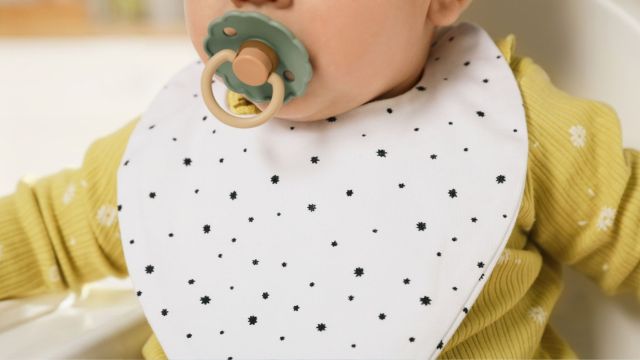
Somewhere around month three, your baby turns into a tiny, adorable faucet. Bibs get soaked, shirts get soaked, you get soaked. And one morning you notice a patch of red, bumpy skin around their mouth and chin that wasn’t there yesterday. Meet drool rash: common, not contagious, and very fixable. Here’s how to spot it, soothe it, and keep it from coming back.
What drool rash looks like
Drool rash shows up as flat or slightly raised red patches, sometimes with small bumps, sometimes looking dry and chapped. It usually lands wherever saliva sits: around the mouth, on the chin and cheeks, and in the folds of the neck. If your baby soaks through their clothes, it can show up on the chest too.
It can look alarming, but it isn’t contagious and isn’t a sign of a serious health problem. It can make your baby uncomfortable, though, so it’s worth treating.
Why it happens (and why now)
The cause is simple: skin that stays wet with saliva for long stretches gets irritated. A few things make that more likely:
- Age. Drooling is normal for the first two years, because babies don’t yet have full control of the muscles around their mouths. Saliva production tends to peak between 3 and 6 months.
- Teething. Hands and teething toys in the mouth mean more drool escaping onto the face. But drooling doesn’t always mean a tooth is coming. Salivary glands ramp up around 2 to 3 months, often before any teeth appear.
- Pacifiers. They can trap saliva against the skin around the mouth.
- Mealtime mess. Once solids start, food left smeared on the face can irritate skin too.
- Sleep. Babies often drool while they sleep, so the rash can seem to appear overnight.
How to soothe drool rash
Most drool rash clears up with care at home. The goal is clean, dry, and protected skin.
- Rinse gently: Wash the area with warm water twice a day. Skip medicated soaps, and don’t over-wash. Plain water is usually enough.
- Pat, don’t rub: Dry the skin completely with a soft cloth. Rubbing, or a rough towel, can make it worse.
- Add a barrier: Once the skin is fully dry, smooth on a thin layer of a healing ointment like lanolin, petroleum jelly, or Aquaphor. It shields the skin from drool so it can heal. Check with your pediatrician before trying new products around your baby’s mouth.
- Go fragrance-free: Stick to unscented baby wash, and keep lotions off the rash itself. Mild, unscented detergent for bibs, burp cloths, and sheets helps too, and so does skipping perfume or essential oils on your own skin.
How to prevent it
You can’t stop the drool (and you shouldn’t: saliva helps babies swallow, softens first foods, and protects new teeth). But you can keep it from sitting on the skin.
- Keep a burp cloth close. Blot drool from the mouth and chin, especially after feeds and naps. Check neck folds and the chest too.
- Bib up. Swap a damp bib for a dry one before the wet spreads to their shirt.
- Give the pacifier a break. Short pauses let the skin around the mouth air out.
- Wipe after meals. Clean food off their face soon after eating.
- Get ahead of it. On extra-drooly days, a thin layer of barrier ointment on the chin, neck, and chest can protect skin before a rash starts.
- Keep the crib bare. It’s tempting to tuck a towel under their head to catch overnight drool, but the American Academy of Pediatrics recommends nothing in the crib but your baby: no towels, blankets, or bibs. A good wipe and a dab of ointment at bedtime does the job instead.
When to call your pediatrician
Call your baby’s doctor if:
- the rash hasn’t improved after about a week of home care
- the skin looks cracked or seems painful
Your pediatrician may suggest an over-the-counter hydrocortisone cream or prescribe one. Don’t start a steroid cream on your baby’s face without their OK.
See a doctor sooner if the rash comes with a fever, unusual tiredness, or trouble breathing or swallowing.
It’s also worth a check-in if you’re not sure it’s drool rash at all. A rash that won’t budge can sometimes be a skin infection or eczema, which look similar but need different treatment, and there’s also the chance of hand, foot, and mouth disease (HFMD). Your doctor can tell them apart.
A soggy little season
The drool era feels endless when you’re on your fourth bib by lunch. But like so many baby phases, it’s gone before you know it. As teething winds down and the drooling slows, the rash usually fades with it. One day the bibs are back in the drawer, and their chin is finally dry.
So while you’re dabbing that chin, grab a photo of their gummy, glistening grin too. In a year, you’ll be glad you saved it.