There’s nothing quite like the sound of a babies laughing and recent research into infant sounds has found that babies laugh just like this animal. Can you guess? Apparently, human babies laugh very much like baby chimpanzees!
Psychologist and associate professor at the University of Amsterdam Netherlands, Disa Sauter, revealed her research into infant laughter during the Acoustical Society of America’s 176th Meeting. Sauter and her colleagues reviewed audio clips of 44 babies between the ages of three and 18 months.
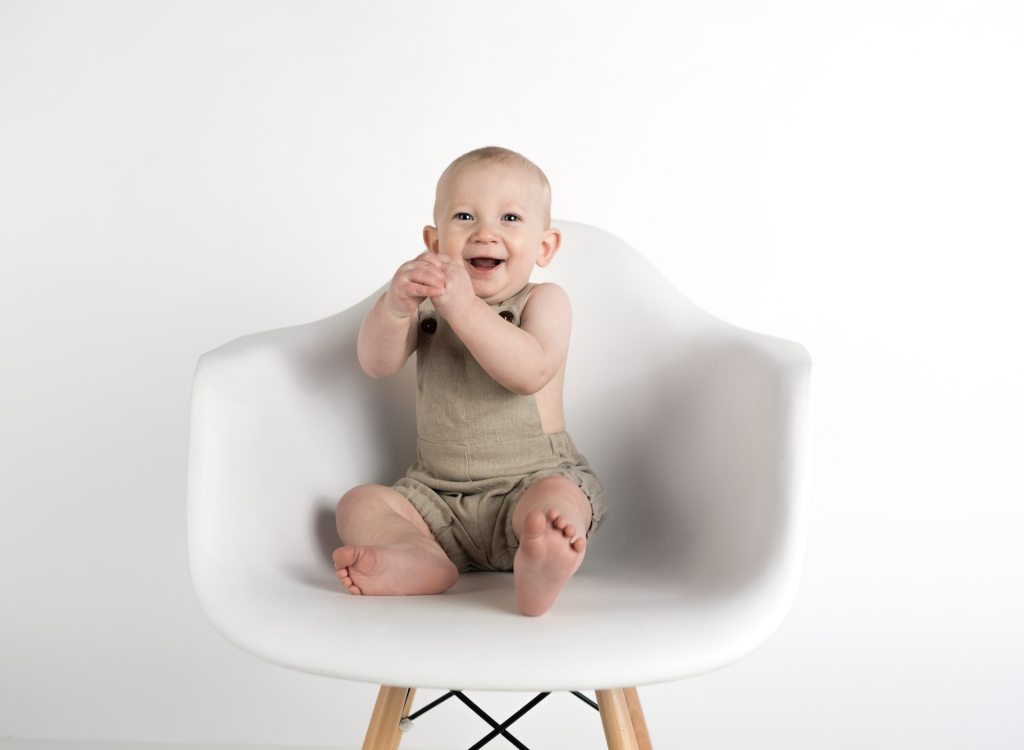
Photo: Henley Design Studio via Pexels
Babies, unlike adults, typically laugh when inhaling and exhaling. Adults tend laugh during the exhale, making our giggles different from our little one’s laughs. But it looks like there is someone else that has a laugh like a baby—a chimpanzee.
As babies age, their laughter changes. Sauter found that the older your kiddo gets, the less they laugh on inhale and the more they laugh on exhale. Sauter notes, “Adult humans sometimes laugh on the inhale but the proportion is markedly different from that of infants’ and chimps’ laughs. Our results so far suggest that this is a gradual, rather than a sudden, shift.”
So what does this all mean? Well first of all, your baby has an adorable laugh—and it looks like (or rather, sounds like) chimps do, too. But when it comes to this line of research, Sauter says that studying infant laughter could eventually shed light on normal/not-so-normal vocalization development.
And now, this seems like the perfect time to watch some videos of babies laughing, don’t you think?
(You’re welcome.)
Make sure to capture all those baby belly laughs—and share them with your family and friends near and far—with the Tinybeans app. The secure platform puts parents in total control of who sees and interacts with photos and videos of their kids.