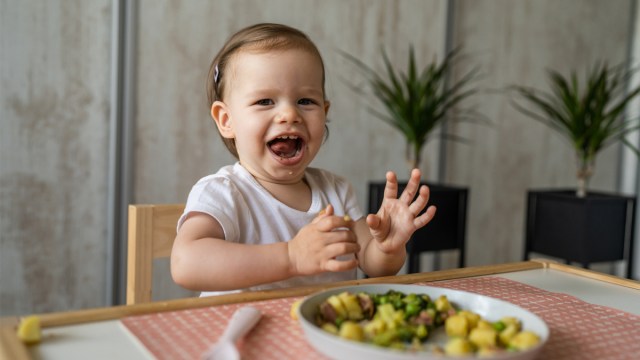
Parents are no strangers to mealtime battles with toddlers. They’re at the age where they’re learning to be independent, discovering what they like and dislike when it comes to foods, and tend to be stubborn about nearly everything—because, well, toddlers. Luckily for all the frustrated moms and dads trying to get a meal in, Cassidy Anderson, SLP and mom of two, has an almost foolproof strategy she calls the “Get them to the plate” method that can get a toddler to stop rejecting their dinner (and possibly even try a new food or two!).
@cassidyandkids TRY THIS TONIGHT!! Feeding our toddlers/kids can be a battle and this ALWAYS helps us 🙌🏻🧁 #realisticmomlife #parentsoftiktok #pickyeating #toddlerfood #pickyeater
♬ original sound – Cassidy Anderson & kids
Related: 7 Mistakes Parents Make With Picky Eaters
How to Get a Toddler to the Plate
A study by the Children’s Hospital of Philadelphia shows that it can take between 8 and 15 attempts to offer a child a new food before they try it. Anderson shares her experience, one that parents will recognize: “You get them to the plate or the dinner table, and they see something they don’t like and don’t want to eat, they’ll say, ‘That’s gross, I’m not going to eat that. What else can you give me?’” Sound familiar?
Instead of caving and feeding them a separate dinner made just for them, Anderson suggests trying a different method: dish out whatever is on the menu for the night, and serve something more enticing alongside it: fruit, a cookie, a snack, a cupcake, whatever you have that you know your child will eat. “It’s part of the meal. I’m not calling it a dessert or a treat. I’m not offering it afterwards. It’s just part of what’s on the menu for the night. They will sit down, they will look at this, and they’ll be like ‘Yeah, I can eat that,’” says Anderson.
Anderson is on to something here. According to Tara Schmidt, M. Ed., RDN, LD, a dietitian at Mayo Clinic, using dessert as a reward or a punishment actually undermines healthy eating habits. “You’re really putting dessert on a pedestal,” Schmidt says. “It teaches kids that they have to get through the broccoli, chicken, and rice to get a cookie. Kids learn that cookies are more valuable.”
Most of us can probably say our toddlers will likely always prefer the cookie, fruit, or goldfish, but Anderson is showing us that it’s important to consider that item a “safe food.” Something you know will interest your toddler from the start. “Once they’re at the table and engaging with food, which is the goal, then try some other tactics to get them to engage with the other food. It’s totally okay to say ‘we don’t have more of that food, but we do have this food’ or something along those lines,” says Anderson.
While this isn’t a foolproof method, and it probably won’t work the first time or even the fifth time or for kids with eating sensitivities, with a little patience—and several cookies—your toddler might just surprise you and eat not only the safe food, but everything else on the plate as well. And if that isn’t a win, we don’t know what is.