Whole Foods has just donated $1.2 million to provide edible gardens at schools across the country—and here’s how your school could be next.

Whole Kids Foundation, the company’s nonprofit focused on kid’s nutrition and wellness, has just awarded grants to 602 schools in the United States and Canada to help implement new school gardens or support ones that already exist. School gardens provide hands-on learning that is linked to every common core subject, including math, science and English.

photo: Maggie Zhao via Pexels

“Through our Garden Grant program, schools and nonprofit organizations transform outdoor spaces into vibrant hands-on outdoor classrooms that connect kids with food, spark their curiosity, and inspire them to make healthier choices for meals and snacks,” said Tristana Pirkl, Outdoor Education Leader for Whole Kids Foundation. “We truly believe in gardens as powerful learning spaces for nutrition, wellness and for all subjects!”

Besides being a great learning tool having access to fresh produce also encourages kids to make healthier choices in their diets. Those healthy habits can extend into the home for the whole family as well.

The Whole Kids Foundation accepts applications for grants each year between Sep. 1 and Oct. 15. Schools are notified of their $2,000 grant award in Feb. For more information on the Whole Kids Foundation Garden Grant program and to apply, check out the website here.

—Shahrzad Warkentin


RELATED STORIES

Could This Simple Plate Design Get Your Kid to (Finally) Eat Their Veggies?

Why Your Pediatrician Should Give Your Kids a Prescription for Fruits & Veggies

The Easiest Way to Get Your Kids to Eat Vegetables, According to Science

You know how your kids can literally run circles around you? Let them put that energy to good use at one of the many kid-friendly races the DMV offers. Whether you’re lacing up your running shoes for the first time or gearing up for another running season, we’ve tracked down a wide selection of local races across the DMV and throughout the rest of the year. All of them welcome strollers and kids, some have kids’ fun runs, and each one has a special perk to make it fun for the whole family. See you out there!

Photo: Capitol Hill Classic

Crystal City 5K Fridays
Run one or all of the 5K Fridays races with your mini-bundles of energy. They’ll get the wiggles out while you blow off some end of the week steam. Grown-ups, don’t forget to grab your post-race drink tickets that can be used at nearby watering holes.

Cost: $20-$25
When: Friday evenings in April
Where: Crystal City
Online: runpacers.com/race/crystal-city-5k-fridays

Arlington Bunny Hop
A fun, festive way to run together as a family, this 5K raises money for charity. Costumes are welcome (er, encouraged), and medals for all kids who finish will be handed out. Stick around for the block party afterwards, featuring free food, bounce houses and live music.

Cost: $5-$45
When: April 27, 8 a.m.
Where: 606 N. Irving St. (Arlington, VA)
Online: arlingtonbunnyhop.org

Photo: Teddy Bear 5K

Parkway Classic
Known as Alexandria’s Hometown Race, runners can opt for the 5k, 10-mile or kids dash races. The 10-miler starts at Mount Vernon and follows the GW Parkway to Oronoco Bay Park in Old Town, while the 5k takes off from Belle Haven Park. The Sugar Shack Kids Dash is an 800-meter dash, and participants get a race bib, a medal and a Sugar Shack doughnut at the end. Note that parents may run with their dashers, and the event is limited to 300 participants. It requires pre-registration, and strollers are permitted.

Cost: $10-$80
When: Apr. 28, 8 a.m. races, 10:30 a.m. kids dash
Where: 3200 Mount Vernon Hwy. Mount Vernon; Belle Haven Park, Alexandria; corner of Oronoco St. and North Union St. (Alexandria, Va) 
Online: runpacers.com/race/parkway-classic

Spring Georgetown 5K and Half
This scenic run on a flat course along the C&O Canal Path is perfect for runners and joggers with strollers. There are medals for all finishers.

Cost: $25-$60
When: May 26, 8 a.m.
Where: 3530 Water St., NW (Georgetown)
Online: bishopsevents.com


Photo: teddy b via flickr

Capitol Hill Classic
The 40th annual race, which winds by sights such as the U.S. Capitol, Supreme Court and Library of Congress, will end with music and yoga. It raises money for the Capitol Hill Cluster School, a D.C. public school with more than 1,000 students. Medal winners are divided by age: under 15 and 15 to 19 for kids. Jogging strollers are permitted.

Cost: $10-$80
When: May 19, 10:30 a.m. fun run
Where: 425 C St., NE
Online: capitolhillclassic.com

Maryland Half Marathon and 5K
The 11th annual race benefits the University of Maryland Marlene and Stewart
Greenebaum Cancer Center. For their efforts, all kids fun run finishers (who will cross the same finish line as the grown-up half marathoners!) receive a medal.

Cost: $20-$40
When: June 8
Where: The Maple Lawn Community
Online: uomms.convio.net

Photo: David Ingram via Flickr

Kids Superhero Dash for Dad (ZERO Prostate Cancer Run/Walk)
The 1-mile dash (and the 5k run/walk) raise money for prostate cancer research, screening and education. Participants get a T-shirt and free food. Strollers are permitted, but race organizers ask that racers start at the back and give the right of way to runners.

Cost: $15-$35
When: Jun. 15, 8:15 a.m.
Where: 1101 S. Joyce St. (Arlington, Va)
Online:support.zerocancer.org

Stroller Run
This 5k for parents and their kids benefits local charities so you can feel good about doing something for yourself and for others. Post-race perks include child care so you can relax and enjoy nearby shopping and refreshments.

When: June 29, 10 a.m.
Online: http://www.thestrollerrun.com/#cities

—Tricia Mirchandani and Stephanie Kanowitz


RELATED STORIES:

14 Local Stroller Friendly Hikes

Hello Skinny Jeans! Local Gyms with Great Childcare

Every week, Xyza: News for Kids publishes a dinner table conversation topic. Why? We want to inspire real conversations about the world of news today with your kids. Because the world of news is fascinating, exciting and frankly, way too interesting!

This week we ask the question, “Who’s faster? A cheetah or an ant?” Why? Read our dinner table conversation topic below!

Did you know that the animal with the fastest moving body part comes from the Mystrium camillae species, otherwise known as the Dracula ant found in southeast Asia and Australia. Its jaws (or mandibles, if we’re being technical) can click at 201 miles per hour. That’s about 5,000 times faster than the blink of an eye. Ouch! Sounds like a pretty painful experience for the prey caught between those jaws!

So what’s the point of this discovery? Well, the ant’s jaw movement is unique because instead of keeping its jaw open wide and then snapping it shut, the Dracula ant starts with a closed jaw and then builds pressure, which causes the super-quick motion … much like the pressure that lets you snap your fingers.

The next step for researchers? To see how the ant uses these speedy powers in nature. Perhaps humans could use the ant’s jaw movements as inspiration to improve the way we use or build things in the future!

Now that we know which animal moves its body the fastest, inquiring minds want to know… who’s faster in the comic book world: Superman or The Flash?

This post originally appeared on Xyza News for Kids.
Joann Suen & Sapna Satagopan
Tinybeans Voices Contributor

We're two perfectly imperfect moms who have five very different kids between the two of us. We believe that topics in news are a fantastic way to spark conversations in families. That's why we started the Dinner Table Conversation series here at Xyza: News for Kids. Won't you join us in the conversation? 

Photo: KIDBOX

On this Global Pay It Forward Day (Apr. 28), don’t be afraid to start the conversation with your kids, because it’s never too soon!

Kids are curious by nature—when they see a natural disaster or pass a homeless person on the street, it’s normal for them to have questions. These moments open up the opportunity to teach them about philanthropy—sometimes by taking action. As a mom of two, this is something I’ve experienced first hand—in particular with my youngest son.

A few years ago on a brutally hot summer day, I was walking around New York City with my younger son, Max. I decided to stop at a food truck to buy several bottles of water for homeless people in the area and had him help me hand them out. This was the perfect introduction for us to have the conversation of the importance of giving back to those in need.

This made a huge impression on him and sparked his charitable drive and ever since he’s been volunteering at the Salvation Army and looking for ways to help others whenever he can.

Not only has this been important to me in my personal life, but as the CEO of KIDBOX, a company with a true heartbeat of social giving, I know more than ever the importance of philanthropy and that it’s never too soon to talk to your kids about it.

With Global Pay It Forward Day right around the corner on Apr. 28, here are my top tips to keep for having this first conversation with your kids:

It’s never too early to have the conversation!

Empathy is something kids can learn from a very early age. I recommend asking your kids how they might feel if they didn’t have any toys at all and how that feeling might change if a friend shared one with them or gave them one.

Start the conversation by explaining to them what philanthropy is.

More importantly, explain why it matters, too. Explain to your kids that giving back doesn’t just mean donating money it can also be donating time and helping bring attention to those in need.

Relate it to a time they needed help.

It’s fairly easy for kids to understand needs—they know what it feels like to experience the emotion of needing something. The best way to help them understand children in need is to talk to them about a time they felt hungry, cold or sick.

Leverage the technology they use often.

In today’s digital age, talking to your kids about giving back and identifying causes they feel passionately about is easier than ever. Browse charities online with your child and explain how the charities help those in need and find educational videos for them to watch on their tablets!

Show them giving back feels good.

Helping them experience what it feels like to practice generosity will create a positive association in your kids’ future—even if the charitable giving is done in an anonymous way. When you share these types of acts of kindness early on, it’s much more likely that your children will also incorporate this kind of compassion as they grow up.

Introduce them to different charities to help them find one they feel passionately about.

Find ways to get your kids involved in giving back, from making meals for the homeless to donating new clothing to children in need, creating moments that open up the conversation will help your kids find the causes they feel passionately about.

Shop brands that make giving back fun and easy.

Shopping brands that give back like KIDBOX, BOMBAS or Art & Eden, that incorporate giving back as a part of their mission, is an easy way to start the conversation with your kids as you select the charity of your or your child’s choice. It’s seamless and integrated into the shopping experience, so kids can see that giving back is as easy and as important as shopping for themselves.

Implement giving back as a part of their routine.

By creating a recurring moment of giving back in your child’s routine, you can help them to understand that giving back isn’t just reserved for times of emergencies, but rather should be something that is a part of their day to day life.
Get them involved in philanthropy-oriented kids groups.

Groups like Big Brothers Big Sisters of America, Girl Scouts USA, Boy Scouts of America or KIDBOX’s Kids Board of Directors help surround your little ones with other socially minded kids their age. Helping them make a bigger impact on their local communities through acts of giving.

Looking for a place to start? Check out KIDBOX’s Look Good Do Good page and join our community through our little leaders or our community moms’ 50 States of Giving & Inspiration program.

Miki Berardelli is the CEO of KIDBOX, the first st‌yle box built around a social mission to clothe children in need. She is the mom of two sons, Max and Vic. 

When I was a kid, I was a daydreamer, but no one knew it. I sat in the classroom quietly and obediently. My teachers always said nice things about me. No one ever guessed I could have an Attention-Deficit Disorder (ADD). I was too well-behaved and I got good grades.

Many years later as an adult, I thought to myself, “I bet I have ADD.” I always misplaced my keys, my phone, my purse. I left drawers and cupboards open all the time. I started one project, only to start another and another, until I had multiple unfinished projects everywhere. I never fully paid attention in any lecture, training or workshop. I would zone out during every staff meeting.

I assumed I had ADD but never followed up. I had got through life just fine­­. That is, until one day…

My journey as a mom with ADD began at work. My daughter was four and my son was two. I worked at a full-time, salary job. I was under the pressure of having to remember so many important things, not-so-important things, interesting things and not-so-interesting things. It’s those boring, not-so-interesting things which are my constant downfall!

I was great at my job, but I regularly forgot to do one really boring task which only took about 10 minutes daily. I tried calendar reminders, Post-It notes and more. They helped for a little bit, but nothing stuck long-term. One day, my supervisor told me, “I don’t want to have to write you up over this.” That was the moment I committed to getting an evaluation for ADD.

My life improved once I got an official ADD diagnosis. Prior to the diagnosis, I had lots of mom guilt and stress. A professional diagnosis is what helped me finally give myself permission to explore how ADD impacts me. Suddenly, it made sense why things felt so hard! Motherhood changed. I now had realistic expectations for myself. I practiced self-compassion. I created effective systems to reduce the chaos in my life. I was empowered!

I finally accepted there are some things most moms are really good at, but I’m just not. For example, because I have ADD:

  • I’m horrible at keeping up with laundry and other house chores, (there’s clothes sitting in the washer right now from yesterday that I forgot to put in the dryer, whoops!). Even though I can create these great systems of organization, my follow-through stinks!
  • I get distracted very easily and so I don’t do well at keeping my kids on a schedule or routine. “Alexa help me! Set a reminder at 8 p.m. for bedtime.”
  • I am so impatient. Kids are supposed to take a long time to do things, but I can’t handle the boredom of playing games, teaching them something new or even just being cool through a tantrum. “We’re going to do something else now. Mommy can’t handle this.”
  • I forget things, really often. “Uhhh, we have to go back. I forgot the diaper bag.” or “Oh no, I forgot to send you to school with your snack/book/homework.” Also: “Where’s your jacket? What do you mean you gave it to me? Oh right, you did, where did I put it?”

Before I accepted ADD as a real issue, I felt guilty that I didn’t keep up with household chores, for being impatient, for forgetting things, for not being able to stick to structures I knew would be good for my kids. And at times, there’s still a little guilt when I mess up, but I’m confident I’m doing my best and am always improving.

I see all the ways being a mom with ADD benefits my kids. Like, I always have mental energy for fun. We are always going places, trying new things and having adventures.

People with ADD have the ability to hyperfocus on interests and because I love creative endeavors, when I plan something, everyone is guaranteed a good time. Family biking trip? I’ll map out a great route with all of the places we should stop for sightseeing and lunch. Trip to Disneyland? We will hit up everything each person wants to do/see in two days, no Hopover ticket necessary. Movie night at home? Let’s make Reeses Pieces milkshakes for ET. Themed birthday party? Absolutely, I can’t wait to make a piñata to fit the theme.

But even though I am great at planning things out, I’m also good with flexibility. With my ADD, I’m used to things not going right and I’m resilient as a result. I’m an out-of-the-box thinker and I hardly worry about things. I take shortcuts for everything (mainly because lots of things are boring).

If there’s an established way to do something, I will find a more efficient or less time-consuming way of doing it. Like potty training for my kids didn’t really involve any training. Every now and then I just asked, “Do you want to use the potty?” and both of my kids eventually wanted to and then they did it. Also, when my kids needed to learn my phone number, we just plugged in numbers to the Mickey Mouse Clubhouse song and that worked great.

Further, my ADD brain remembers lots of random details. Sure, I can’t tell you where I put that check I need to cash, but I remember how you like your burgers cooked and your topping preferences, where you’re from and whatever else you might have done or told me when we were hanging out. I also remember those details for my kids and this helps me predict what they need and what’s going to bring them joy. I know they feel loved.

Even though I have shortcomings others won’t understand and may even judge me for, I’m okay with it. In fact, I am happy I have ADD. There are so many positive things about my ADD which make me unique and I view these as my natural strengths. My journey as a mom with ADD is a great adventure for which I’m so grateful.

I'm a mom and a therapist with a private practice where I specialize in issues of anxiety, mom stress, teens and eating disorders. At home, I'm a big fan of living room dance parties, family adventures and bike rides to the taco truck. 

Photo: Kristin Van de Water

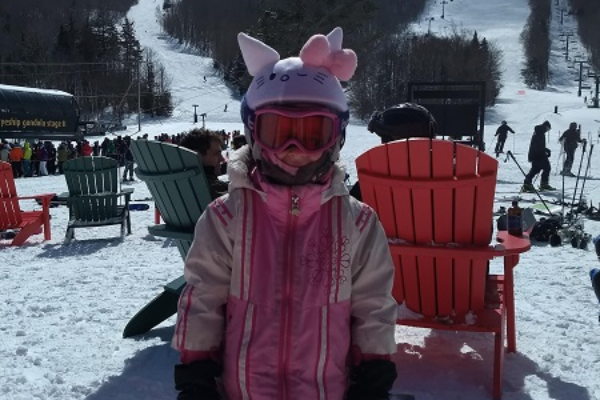
We all know getting out the door with little kids underfoot is an endeavor on an ordinary day. Preparing for a ski day with four kids under six, however, calls for a whole new level of parenting dexterity—and especially the determination to push through the craziness.

Getting my family geared up, outside and onto the ski slope is a whole lot of journey for a (thankfully) incredible mountainside destination. When I get bogged down in the process and wonder, “Is it really worth it?”

I just tell myself, “Yes” and keep moving through the steps. Any of these sound familiar? (Number 21, anyone?)

  1. Wake up and rejoice that it’s Saturday—my day to sleep in!
  2. Roll over and realize that it’s a ski weekend, so I do actually have to get up.
  3. Dish up and eat somewhere between 6 and 12 bowls of cereal.
  4. Brush six sets of teeth.
  5. Explain to my four-year-old that, no, she can’t stay by herself while the rest of the family goes skiing. And yes, that means get ready now.
  6. Make a note to invite friends along whose kids will motivate mine to ski.
  7. Turn thermals right-side out and squint at rubbed-off labels to decipher whose is whose.
  8. Search high and low for missing mittens, only to discover 10 minutes later that they are already clipped onto my son’s jacket.
  9. Pack peanut butter and jelly sandwiches into jacket pockets, knowing they will inevitably get squished and that you will end up eating them while the kids dig M&Ms out of your trail mix.
  10. Stock pockets with Kleenex and granola bars.
  11. There are too many bodies and too much gear around, so send husband ahead to take your toddler to daycare at the mountain, drop off skis and poles by the lodge and pick up lift tickets.
  12. Smear on sunscreen and Chapstick so no one looks like Rudolph at the end of the day.
  13. Convince kids to use the bathroom before climbing into snow bibs.
  14. Throw ski socks in the dryer after they get wet while washing hands.
  15. Shove kids’ feet into boots. Adjust buckles at least three times because they are too tight, too loose and lopsided.
  16. Stretch goggles over helmets without flinging them across the room.
  17. When husband returns, tuck ski passes into jacket pockets and pray they stay there.
  18. Zip up jackets for those who mitten-clad hands leave them helpless.
  19. Take off neck warmers because now they are too hot. Tuck them into your ski jacket because of course they will get cold later. Throw in an extra thermal top just in case.
  20. Send the kids outside to cool off while you take 60 seconds tops to use the bathroom and gear up.
  21. Open the door to discover your kids are sopping wet from stomping and digging around in two feet of snow.
  22. Take off your layers as now you are overheating. Strip off the kids’ wet bibs, socks and mittens and put into the dryer. Dump clumps of snow out of boots.
  23. Establish new rule: no playing in the snow.
  24. Feel like a grinch. Update rule: Make sure the elastic on your snow pants is covering your boots so the snow can’t get in.
  25. “I’m hungry!” How is it already snack time?
  26. Pray for patience.
  27. Brush teeth again.
  28. Potty checks again.
  29. Suit up again.
  30. Take a deep breath and remind yourself that skiing is a life skill and the fresh air will do everyone good.

And, hopefully, someday you will enjoy glorious ski vacations with your future grandkids because of the craziness you push through today—even if today only amounts to one run.

Kristin Van de Water
Tinybeans Voices Contributor

Kristin Van de Water is a former journalist and teacher who relies on humor, faith, and her mom crew to get her through the day. Raising four kids in a two-bedroom NYC apartment, Kristin is always on the lookout for life hacks to save time, space, money, and her sanity.

Looking for some festive and fun Easter events? Then you’ll want to mark your calendar for the free Easter Toy Egg-Stravaganza at Target!

Head to your local bullseye retailer on Saturday, Apr 13 from 10 a.m. to 1 p.m to enjoy fun photo opportunities, giveaways and interactive toy stations highlighting popular toys like LOL Suprise!, LEGO and Hatchimals. The totally free event is great for parents and kids of all ages!

photo: Target

Before heading to your local store, be sure to check Target’s website to make sure it’s participating in the event. While you’re there, check out all the awesome Easter basket ideas that Target has to offer, like toys under $10, $25 and $50.

––Karly Wood


RELATED STORIES

Target’s Car Seat Trade-In Event Is Back & Hello, Savings

Get a Sneak Peek at Target’s Stunning New Home Collections for Spring

Is Target Open on Easter Sunday? Here’s Which Stores Are Open This Year

6 Egg-cellent Easter Decor Picks Under $15 You Can Get at Target Right Now

This week we’re living our best life with kids: navigating Spring Break, trying to keep enough snacks in stock and all the other things that come with raising tiny humans. If you’re in the trenches and need a mini-break, kick back with our roundup of funny tweets and know that you’re not in it alone!


1. No, no you do not.

2. SNACKS.

3. Truth.

4. 🙄

5. Can’t be greedy!

6. Because, kids.

7. #dadlife

8. Goals.

9. The truth about game night:

10. When you don’t want to go to school…

––Karly Wood

photo: Ryan McGuire via Gratisography; composite by Karly Wood for Red Tricycle


RELATED STORIES

Funniest Parenting Tweets of the Week: Mar. 29, 2019

Funniest Parenting Tweets of the Week: Mar. 22, 2019

Funniest Parenting Tweets of the Week: Mar. 15, 2019


Kids scared of the dentist? There’s an app for that! This new dental app for kids can help with those dental office fears in one clever—and dare we say it, fun—new way.

The Mimi the Hippo app is designed to prepare kids for a trip to the dentist’s office by introducing them to what the experience looks like and what they can expect. It combines footage of the actual dentist’s office that the child is going to visit and recordings of their dentist into an interactive virtual tour hosted by Mimi, a friendly animated purple hippo.

photo: Courtesy of Yonder

Mimi guides kids through the dental office at a kid’s eye level showing them all the sights, including dental tools and a friendly, smiling dentist.

Dr. Teresa Fong, a pediatric dentist with Metropolitan Pediatric Dental Associates, tested out the app on several patients and found success with all of them. The biggest change she noticed was that all of her patients were willing to open their mouths wide for an exam.

Here’s a demo of the app in action:

“We sit at the intersection of education and entertainment to drive better health outcomes,” said Adam Choe, co-founder of Yonder. “By blending those two things together, we think we can have a perfect platform to help prepare kids for better health outcomes.”

As of now, Mimi the Hippo is only available in the greater Minneapolis, Minnesota area—but the app developers hope that more dental practices will join their network of providers to help more kids.

—Shahrzad Warkentin

Featured photo: jarmoluk via Pixabay


RELATED STORIES

The Secret to Getting Your Kids to Brush Their Teeth for 2 Minutes (Every Time)

This Subscription Toothbrush Service Wants to Make Brushing a Breeze for Kids

Is This App as Good as Your Regular Birth Control? Science Thinks So