Do you have a budding novelist at home? Barnes & Noble, Inc. is pleased to announce its first National Children’s Short Story Contest for young storytellers and promising wordsmiths!
Barnes & Noble is calling on children ages 6-12 to share their original short stories for a chance to be published in a book, as well as receive a signed edition book from bestselling author Gail Carson Levine. “We believe in the power of stories to inspire and bring joy, particularly in challenging times such as the one we’re living in now,” said Jackie De Leo, Vice President and General Merchandise Manager of Bookstore at Barnes & Noble. “Our Children’s Short Story Contest was created to be a fun and motivating outlet for young writers to share their work. We can’t wait to see the submissions, and although we can’t share all of them, we’re looking forward to publishing some budding authors in a book to be showcased by Barnes & Noble.”
Parents or legal guardians can submit the work on the Barnes & Noble website. Fifteen select entrants will be published in a book sold exclusively at Barnes & Noble this holiday season, with proceeds going to charity.
The 15 winners and 15 runners-up will also get a signed book from bestselling author Gail Carson Levine, who will be writing a forward to the published book. Both groups will also have the chance to be featured on Barnes & Noble’s social channels
“We’re so thrilled to be partnering with Gail Carson Levine on this project as she is an author and writing teacher who shows kids, and all of us, the magic of stories and storytelling,” De Leo said.
Guidelines for submission are:
Parents or legal guardians can submit an original written or graphic short story on behalf of children ages 6 to 12 from Apr. 27 through Aug. 31 on the Barnes & Noble website.
Entries should include the parent or legal guardian’s name, email, and address. Only the child’s first name and age should be provided with your entry.
The work must be an original written or graphic story.
Suggested word count is 300 to 800 words or four pages of a graphic story (black & white).
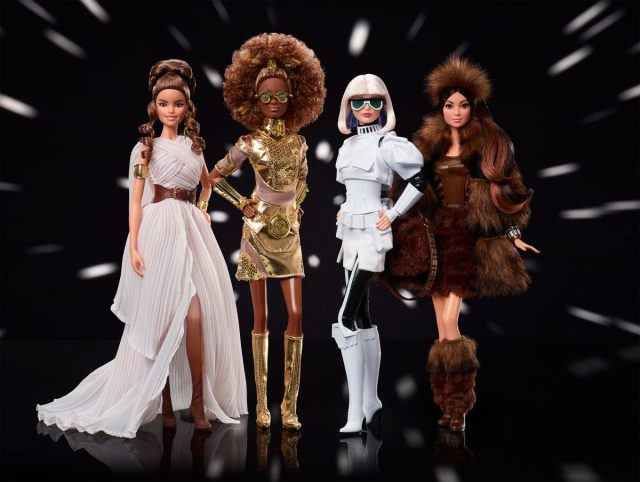
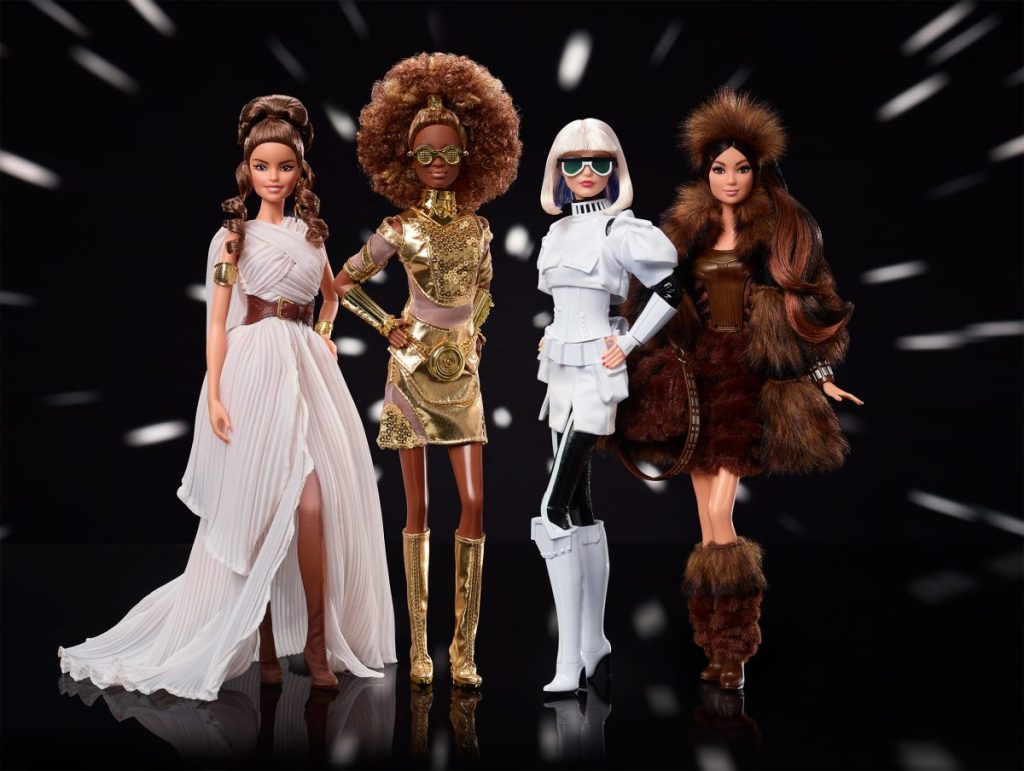
Barbie has teamed up with Star Wars on its latest collaboration paying homage to Star Wars, by putting a high-fashion twist on iconic characters. Last year, Mattel introduced a line of Star Wars x Barbie dolls inspired by Princess Leia, Darth Vader and R2-D2. This year, they have unveiled additional dolls inspired by Chewbacca, C-3PO, Rey and Stormtrooper characters.
The Star Wars Stormtrooper x Barbie takes design inspiration from their legendary look to capture their plastoid armor in a runway-ready silhouette.
Star Wars Stormtrooper x Barbie is striking in head-to-toe white over a black bodysuit with a shiny patent-leather look. A platinum bob, dark glasses, cuffs, a utility belt and boots with a knee protector plate detail complete the battle armor-inspired look.
The Star Wars C-3PO x Barbie® doll takes design inspiration from C-3PO’s legendary look to capture his golden armor in a runway-ready silhouette.
Star Wars C-3PO x Barbie shines in a head-to-toe liquid gold look with accents of sheer organza and golden sequins. Polished details include a golden collar, bangles , C-3PO-inspired glasses and a brilliant cincture echoing the droid’s primary power coupler outlet.
The Star Wars Chewbacca x Barbie takes design inspiration from Chewie’s legendary look, bringing a glamorous edge to signature costume elements.
Star Wars Chewbacca x Barbie wears a lavish faux fur coat over a strapless dress with a fur skirt and bodice of vinyl and sheer organza.
Chic details include a furry headband and knee-high boots, as well as cuff bracelets and a handbag inspired by Chewbacca’s signature bandolier and satchel.
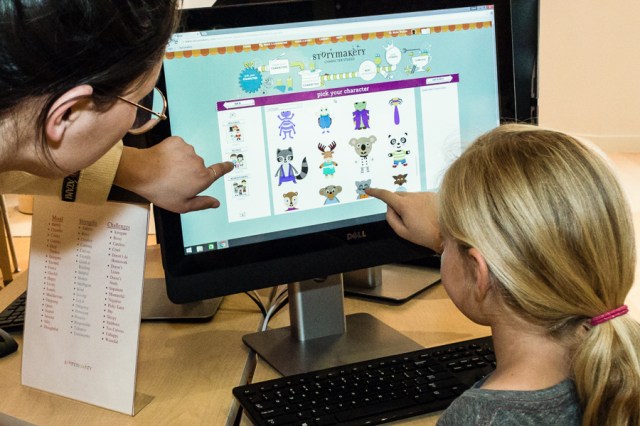
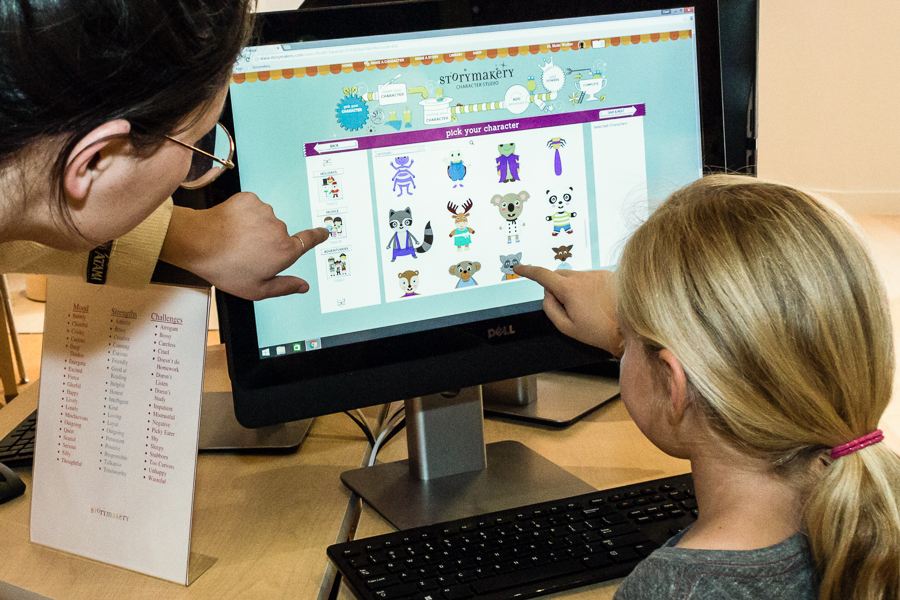
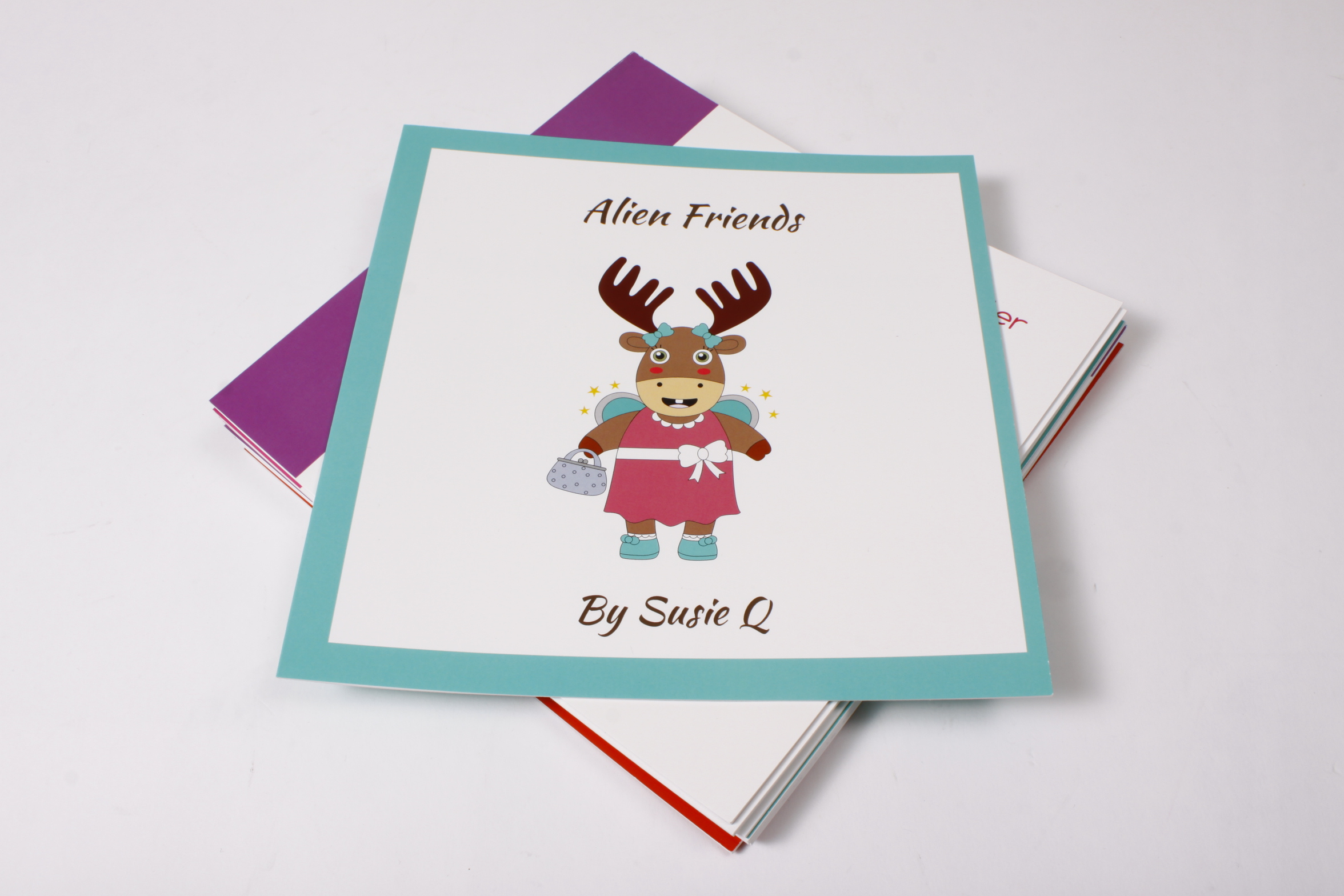
If your little readers are in need of some fresh stories, now is the perfect time to let them become their own authors! Storymakery, the first self-publishing experience designed uniquely for children, has just announced online-led classes for kids to create and publish their own books.
Online-led Storytale Express Workshop offers kids the ultimate creative outlet, where they can enhance their writing, self-expression and cognitive thinking skills by developing and publishing their own book.
The workshop is an instructor-led experience that uses one-on-one guidance with Muse staff. Kids will get assistance in character creation and story-building, in addition to receiving access to a conferencing system, free Storymakery account, a soft cover book and free shipping.
Whether you choose to participate in their Online-led Storytale Express Workshop (great for children ages 4 and up) or order a personalized book online (perfect for younger children), Storymakery is an essential enrichment experience for all children during this challenging time!
We have hunkered down over spring break due to the coronavirus, which has meant lots of family movie watching. One of the first flicks we were sure to catch was the last in the Star Wars series, The Rise of Skywalker. It brought me back to this article that I penned four years ago and still holds true. I added a new point to the list as well. Moms of boys, I hope this makes you smile…
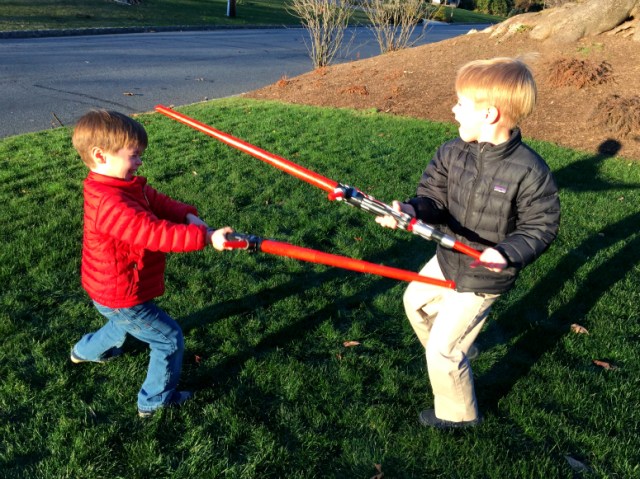
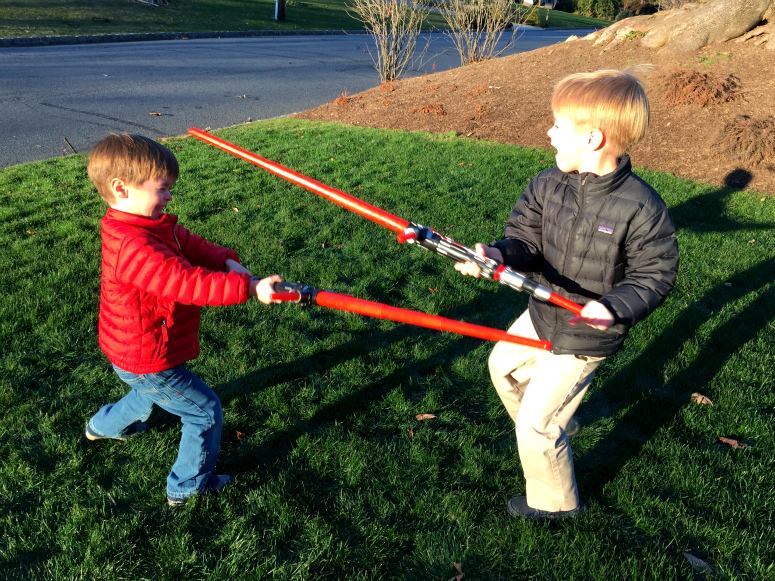
My boys, ages four and six, watched the Star Wars trilogy for the first time this winter. They couldn’t wait to reenact the scenes. They became proud owners of matching lightsabers, courtesy of their grandparents.
The sabers glow red and make a sound upon impact. One afternoon after jostling, my older son ran to me in amazement. Apparently, they had just fought with their eyes closed and their lightsabers still met. He proudly announced that they now knew the ways of the Force.
While I knew they needed an outlet for their energy, especially when it was too cold to go outside, I worried the sabers would miss their intended target and leave a welt on someone’s cheek. As I laid down the respective ground rules before their next jostle, like keeping their eyes OPEN, my older son said proudly, “Mommy, you don’t have to worry. We have training.” And there was no doubt in his mind that this was the case.
This experience, among many, has matriculated in the following list. Moms of little boys know the adventure of raising them is often one with distinct markings. Along the path of wanting to raise gentlemen, I’ve had to be an observer of a world that’s very different from my own. I balance every day the desire to mold them and let go, being respectful of their boyishness. Here is what I’ve learned while maneuvering their dynamic, yet endearing world:
1. What’s cool has nothing to do with conversation or pampering—it’s watching Star Wars and memorizing every line.
2. Sword fighting requires no rules or training, at least in the way that you view training. Yoda, can you help here please?
3. Boys often bond through sports and wrestling. Sometimes they remind you of puppies. In a cute way.
4. Hugs and playful punches express equal endearment.
5. The only drama they know is playing until someone gets hurt.
6. Their pockets are always full—of something. Sometimes you’d prefer not to know. But you’d better find out BEFORE doing the wash.
7. Stones really do look prettier after the wash though.
8. Boys need a special place to stash their treasures. These treasures might include: a rock, stick, dead bug, baseball card, or money. All have equivalent value despite your assessment.
9. What’s gross is often either interesting or funny or both.
10. It’s not their stuff unless they can mess with it. And mess with it means tie ropes to it, punch holes in it, dunk it in water to “experiment” with it, launch it, etc…
11. They prefer to be on the move…to anywhere and at anytime.
13. Speaking of food, when you cook a meal they enjoy, they really do feel your love (and this doesn’t change as they get older).
14. A favorite shirt isn’t truly a favorite unless you have to pry it off of their bodies to wash it. The word dirty isn’t in their vocabulary and certainly doesn’t apply to anything beloved.
15. Sometimes when they hold you, they make little gestures they only do with you, and you remember them as your baby. Those are the best moments of your day.
Noelle Kirchnerbelieves we don’t have to live with full schedules and thin souls. A mom of boys, she's a minister who's published in places like the TODAY Show Parenting Team, Huff Post Parents and iBelieve.com. Her television show, Chaos to Calm, features parenting hot topics and has hosted three New York Times bestselling authors.
If there’s one debate that refuses to die in my house, it’s the one on social media—is it a good or a bad thing?
Like most parents, I’m concerned that teens spend too much time on social media. It’s too distracting. Every time my teens are home, they seem to have their faces glued on their screens: swiping, typing, liking and commenting on their favorite social media sites. They seem oblivious to the world around them and I often find myself berating them for not being present in the moment. Additionally, I’m guilty of bemoaning the fact that most of their interactions happen via social media and not face to face with their friends.
Other than its addictive nature, I also fret about my teens’ safety on social media sites. I find myself worrying about them being approached by online predators or becoming victims of cyberbullying. I mean, who really knows who is behind those screens and what their intentions are?
Plus, it’s hard to ignore all those studies telling us how bad social media is for our mental health. Sure, we know that what is on social media is heavily curated but that doesn’t stop us from making unhealthy comparisons with the perfectly filtered lives we’re bombarded with. If we adults constantly fall into that trap, how much more vulnerable are our teens, considering how impressionable they are?
Different Sides of the Same Coin
Being a concerned parent, I brought up the issue with my teens and their response surprised me. They not only opened my eyes to the upside of social media but also gave me insight into just how differently adults and teens view it.
As you can tell from my concerns above, we adults mostly view social media with suspicion, especially where our teens are concerned.
However, teens see social media as an outlet of self-expression and it allows them to experiment and explore various ways of expressing themselves.
My teen son, for example, tells me that if it wasn’t for social media, he’d never have discovered his love for drawing. He shares his art with his friends and this gives him a sense of identity. He feels seen and he gets a sense of belonging by connecting with others who share his love for drawing and animation.
My teen daughter, on the other hand, is a selfie queen. What I see as narcissistic behavior is her own form of self-expression. As Taylor Fang, winner of the MIT youth essay contest on “What Adults are Missing about Technology” says, selfies aren’t just pictures, they are self-portraits that represent teens’ ideas of self. They’re important and meaningful modes of self-representation.
My teens also pointed out that using social media and communicating with people from different countries and backgrounds raises their awareness of the world around them. It helps them understand how the world works and gives them a chance to carve their niche.
So while we adults are busy highlighting the negatives of social media, our teens are using those platforms to discover and nurture their passions, build their identities and search for their creative selves. They have created communities based on common interests and have found countless ways of expressing themselves.
Finding the Middle Ground
Ever since my teens’ revelations on social media, I challenged myself to look at things differently and I encouraged them to use social media platforms more meaningfully. Instead of passively consuming what they come across on different sites, I challenged them to become active participants by initiating deep conversations online.
Nowadays they create their own content as well as share and invite discussions on social media. This makes their social media time more useful, engaging and productive.
As parents, maybe we can learn from our teenagers and acknowledge that there is so much more to social media than the negatives. Used productively, social media can be a powerful tool for connection, self-discovery, and self-expression
Tyler Jacobson is a happy husband, father of three, writer and outreach specialist with experience with organizations that help troubled teens and parents. His areas of focus include: parenting, social media, addiction, mental illness, and issues facing teenagers today.
With over 27 years of coaching experience (physically and mentally) under my belt, I am well aware of the challenges our youth face. Self-image and self-perception are key points of emphasis for me when I work with clients, male or female. Both of these topics affect every area of our lives and dictate the way we make decisions.
So how do we help our teenagers overcome this and develop a more positive self-image and positive self-perception through a period of life where they are pressured to feel the opposite?
1. Lead by example for your teens. I have found through years of research that girls and women struggle more with their self-image and self-perception. How could we not? Every magazine, social media outlet, and commercial we see on television portrays the “perfect” body and urges you to use filters to cover up imperfections. The best way to show your teen how to treat themselves is to treat yourself well first. Children have a tendency to copy what their parents do. Your inner monologue may very well end up being theirs. Treating yourself well and having a healthy lifestyle will rub off on your teenager. When we walk with confidence, our children will tend to do the same.
2. Give your teens the resources they need. Let’s face it, we don’t have the answers to every question. Our teens face personal inner battles just as we adults do. Some things may be difficult for them to talk to us about. That doesn’t mean we don’t want those personal battles to be addressed and solved. Giving your teen trusted outlets for help and support not only shows that you acknowledge their blooming independence, but it also shows trust and allows them to learn how to solve problems they have for themselves. Buying your teen books like #1 Amazon Best Seller, “The 30 Day Self Perception for Teen Girls” (The Teen Boy Edition is coming!), is another way to assist them in forming a positive self-image and self-perception. This book walks teenage girls through various exercises and gets them journaling habitually. It’s not only good for their mental health but equips them with the tools to make positive decisions for their future.
3. Positive reinforcement for your teen. One of the best ways to boost your teen’s self-image and improve their inner monologue is to tell them the things you want them to tell themselves. Most self-image and self-perception issues are created in the mind. Teenagers don’t see life as a whole just yet. They truly believe that when something feels like the end of the world, it really is. By speaking to them positively and creating a dialogue for them, we are assisting in teaching our teens how to create one for themselves. This is a habit they will carry for the rest of their lives.
4. Opening the line of communication with your teen. Creating a safe space for your teen to talk openly about their insecurities is incredibly important. Typically, teens are apprehensive to speak to their parents about their personal areas of struggle. However, as parents, we are the best equipped in their lives to help them overcome these obstacles. How you make them feel about their thoughts will dictate how they create boundaries and stand up for themselves as adults. Communication is absolutely integral for a plethora of reasons. When our teens are able to speak to us, they will be able to speak to others. Teens create healthy boundaries within their families first and then implement those same boundaries with their friends and in relationships outside of their home. Some parents have even set a specific room in the house called a “Safe Room” or a “Safe Space” that is a designated area to speak about important issues with their teens with no judgment. Being proactive about this line of communication not only makes your teen feel safe and heard, but it also gives you the ability to teach them how to communicate their feelings and act on them successfully.
5. Do things with your teen together. It is important to choose an activity that you and your teen can enjoy together. For instance, doing “The 30 Day Self Perception Makeover” with your teen is a great way to not only improve yourself but also help your teen. It’s important for teens to see their parents constantly improving themselves. This makes them feel like they are free and safe to do it themselves. When you do these self-improvement activities with them, you are able to guide them and teach them through the process. Your teens’ friendships will come and go throughout their entire lives. This is a difficult reality, but one that has to be accepted. The most important relationship they will ever have is the one that is fostered by you. This allows us to guide them through their most integral decision making and become their safe space to land.
The most important aspect of helping a teen gain a positive self-image and self-perception is communication, and along with that comes trust. These two virtues are the most important in any type of relationship. Speaking openly with your teen and asking questions is incredibly important when gauging what needs to be done for your teen. If you are looking for more resources to help your child, visit www.cathleneminer.com. When we are able to talk to our children, we are able to help them and put them on the path for success.
Confidence in our teens first begins with confidence within you. Remember, always lead by example with your child. If you want them to have healthy habits, then show them what healthy habits look like. If you want them to love themselves, you must first show them how well you love yourself.
Ruthi Davis is a the Founder of Ruth Davis Consulting LLC with over two decades of success in advertising/marketing, media/publicity, business development, client relations, and organizational optimization for a variety of clients. Ruthi is a proud mom and influencer in the parenting and family market as founder of the Superfly Supermom brand.
Destination Maternity, the parent company behind expectant mama fave retailers Motherhood Maternity and A Pea in the Pod, is reportedly shuttering more than 180 of its stores.
The closings come as the company recently voluntarily filed for Chapter 11 bankruptcy protection. According to Lisa Gavales, Chair of the Office of the CEO, in a press release, “This decision is a difficult, but necessary one.”
Gavales continued, “In a challenging retail environment, we have had to make some very tough choices, but we are confident that the steps taken today provide an opportunity to continue a marketing process that provides the most efficient means of maximizing value to our stakeholders. Throughout this process we will be focused on developing the promising interest already shown by potential bidders, and maintaining operational momentum toward a stronger business.”
Several Motherhood Maternity locations were already slated for closing prior to the Chapter 11 filing announcement. Look for deep discounts during liquidation sales. These stores include:
Central Mall: 5111 Rogers Ave., Fort Smith, Arkansas
The Avenue Viera: 2261 Town Center Ave., Melbourne, Florida
Waterford Lakes Town Center: 385 N. Alafaya Trail, Orlando, Florida
CherryVale Mall: 7200 Harrison Ave., Rockford, Illinois
Great Lakes Mall: 7850 Mentor Ave., Mentor, Ohio
Denton Crossing: 1800 S Loop 288, Denton, Texas
Sunrise Mall: 2370 North Expressway, Brownsville, Texas
Town East Mall: 2204 Town East Mall, Mesquite, Texas
North Town Mall: 4750 N Division St., Spokane, Washington
Southridge Mall: 5300 S. 76th Street, Greendale, Wisconsin
Along with the Motherhood Maternity locations, A Pea in the Pod located at The Groves at Shrewsbury: 597 Route 35, Shrewsbury, New Jersey will also close.
U.S. Motherhood Maternity and A Pea in the Pod stores that will close as part of the company’s latest bankruptcy filing announcement include, according to USA Today:
The biggest news of the year for Disney Parks is the opening of Star Wars: Galaxy’s Edge, but the fun isn’t stopping there. On the heels of the grand opening, Disneyland is paving the way for it’s next big hit: Marvel land at California Adventure.
The Disneyland Resort is already moving ahead on its plans for a super expansion to California Adventure with the addition of a Marvel-themed land. While there is no opening date set, the ball is officially rolling as the city of Anaheim, where the resort is located, has approved several building permits for the new addition.
photo: Joshua Sudock/Disneyland Resort
According to the Los Angeles Times the permits include projects like bathroom renovations, the addition of a retail outlet, microbrewery, a character meet-and-greet area and more. The newspaper is also reporting that one of the new attractions being added is rumored to be an interactive Spider-Man themed ride. Disney will likely reveal more details of the new land at the upcoming D23 expo in August.
Earlier this year Disney closed the area of California Adventure known as A Bug’s Land in order to clear space for the upcoming Marvel-themed section, which will combine with the already existing Guardians of the Galaxy — Mission: BREAKOUT! attraction.
Have you ever wondered whether after-school activities are worth the hassle? Getting your child to activities after school can be incredibly difficult, especially in the city when we rely largely on public transportation. You have to be extra prepared by having a snack ready for your always-hungry student, sometimes bringing an extra bag with equipment for their after-school activity, and planning ahead for the weather. And if the bus is late, so are you!
According to a 2006 study, all of this hassle really is worth it if you want your child to do well in school, as the researchers found that extra-curricular activities improve academic performance in students. The study looked specifically at middle school students, but it is safe to assume that the results would be the same for younger children as well. The study did not look at the amount of time each student spent in after-school activities, and it is important to remember not to over-schedule your child as that can lead to burnout and increased stress for the whole family. The number of activities a child can handle without increasing stress each week will be unique to them. This should be a decision that you and your child make together based on your child’s wants and needs and what works for your family.
The study did look at the types of activities that have the most academic benefit for children. Interestingly, the study found that after-school classes that focused on study methods and how to succeed in school did not lead to improved performance in school. However, academic-based activities were highly beneficial for academic performance. Academic-based activities include foreign language classes, tutoring, science classes, and computer activities such as coding. As a secondary benefit, sports also led to improved achievement in school after academic-based activities. Sports classes include soccer, tennis, swimming, and gymnastics—any class where your child gets to move their body!
The biggest positive effect on educational achievement occurred when students were enrolled in both academic-based and sports-based activities. Children who had a balance of extra-curricular activities demonstrated better academic performance than the other children in the study.
This suggests that finding one academic-based and one sports based activity for your child per week is likely to improve their performance at school. It is also important to ensure that you pick classes that your child is interested in, as you want your child to enjoy learning and participate during the class. Classes should be a fun outlet for your child–not a source of stress!
Go Bambino has a variety of academic-based and sports classes, so you will be sure to find exactly what you and your child are looking for!
GoBambino helps parents discover and book kids' activities, lessons, classes, camps and workshops. Stress-free and commitment-free. We built GoBambino to simplify (ever-so-slightly) the chaotic lives of today’s moms and dads.
A Texas elementary school art teacher has gone viral because she turned her students’ artwork into her very own wearable work of art—and you have to see the pics!
Rebecca Bonner, a teacher at Mcauliffe Elementary School in Highland Village, Texas armed her students with Sharpie markers and let them go to town drawing all over her dress. Bonner told Good Morning America it was a great way to get her 580 students, who range in age from three to 11, “excited about art.”
Bonner says she got the idea from a private Facebook group of which she’s a member where fellow elementary school art teachers share their projects and inspirations. “I got fabric markers and Sharpies,” Bonner told Good Morning America. “I laid out my dress for two weeks and just let them doodle on it.”
Bonner’s daughter, Charlece Lake, posted pictures of her mom wearing the dress on Twitter, where it instantly went viral garnering over 100,000 likes. Lake credits her mom with inspiring her to become a teacher as well.
“I think it’s really important for kids to have that outlet, to have that place to create, and that freedom to create,” Bonner said, revealing that her new catchphrase is, “Turn your mess up into a dress up!”