With the shifting landscape of visual media, it should come as no major surprise that change is needed in the print world as well. A new report by Scholastic Books finds that parents want more diverse books for their kids.

According to Scholastic’s biennial Kids & Family Reading Report, 88 percent of parents believe that reading fiction and nonfiction is a good way for their kids to better understand the world and three out of four kids agree. To truly project the world around us, however, more diversity is needed in the characters and storylines represented in children’s books.

The report, which surveyed more than 1,000 pairs of kids ages 6 to 17 and their parents, as well as 678 parents of kids ages 0 to 5, found that both kids and parents agree that books need to reflect more diversity. Among kids and parents who agree that diversity in children’s books is important, 76 percent of kids and 69 percent of parents wish there were more books available that are diverse.

For the majority of parents and kids ages 9 to 17, diversity was defined as including people and experiences different than their own, including representations of various cultures, customs, religions, settings and living situations. Diversity was also defined by many as including differently-abled people, people of color and LGBTQ identities.

“The Kids & Family Reading Report puts even more power behind our belief that diversity in books matters,” said Andrea Davis Pinkney, VP, Executive Editor at Scholastic, bestselling children’s book author and Coretta Scott King Book Award winner.

“When kids don’t see books that reflect diverse experiences, they’re not emboldened to expand their thinking. But when a young reader finds a story that positively reflects his or her own story—or presents the stories of people not like themselves—that child becomes encouraged to read more. This has a direct impact on how kids view their place in the world, and helps them develop empathy and open-mindedness. Tomorrow’s leaders need to see themselves in books. The report empowers us to help kids do that.”

—Shahrzad Warkentin

Featured photo: i410hlr via Pixabay


RELATED STORIES

11 Kids Books That Encourage Diversity & Inclusion

These New Harry Potter Books Will Help Kids with Dyslexia

Kids’ Love of Reading Drops Sharply at This Age, New Report Finds

When you’re traveling with kids getting to your destination on time is critical to avoiding meltdowns for your kids and everyone else. Before you book your next flight new research reveals the most on-time airlines in the United States.

According to the annual U.S. Department of Transportation’s Air Travel Consumer Report, the airline with the most on time flights in the country is Hawaiian Airlines. The report found that Hawaiian had on-time arrivals for 87.5 percent of all its flights last year.

photo: Tomas Delcoro via Flickr

Coming in at second best airline for on-time flights was Delta Air Lines with 86.1 percent of last year’s flights arriving on time. Rounding out the top three is Spirit with 84.5 percent on-time. The average rate of on time arrivals among all American carriers was just 79.4 percent last year, down from 80.2 percent in 2017.

The worst airlines for on time flights? Frontier Airlines and JetBlue, which clocked in a 74.4 and 74.5 percent of on-time flights each.

—Shahrzad Warkentin

Featured photo: Rawpixel


RELATED STORIES

This Epic Airline Safety Video Used 20 Million LEGO Bricks to Pull It Off

Best Family Airline Ever? Frontier Airlines Now Lets Kids Fly FREE Up to Age 14

The World’s Safest Airlines Are Kid-Friendly, Too

Gift giving can be stressful, especially when you’re bound by a budget. If you’re stuck on what to bring to the next birthday party or holiday gift exchange for the kids, think educational! Our roundup of Amazon Prime-friendly gift ideas give the gift of knowledge, and all for under $25 a piece.

Brain Flakes

Kids don't just use their imagination when they play with brain flakes ($15), they are enhancing their spatial thinking, too! With over 500 pieces per container, there is no end to the creations your kiddos will come up with. It's a perfect STEM activity for future engineers!

USA Toyz Stem Building Toys

You get a ton of bang for your buck with USA Toyz STEM Building Toys ($20). The 101-piece set comes with interlocking gears and plastic building blocks that lets kids build basic or complex STEM creations and is great for kids as young as three.

Kanoodle

Perfect for kids 7 and up, Kanoodle ($7) is great for puzzle lovers. Kanoodle comes with 12 puzzle pieces, 200 puzzle challenges in a 48-page illustrated puzzle book, and a carrying case which means it's perfect for taking on the go. Kids will stretch their brains as they strive to make both 2D and 3D puzzles with brightly colored pieces.

Plus-Plus Open Play Construction Set

Plus-Plus bricks are a great building toy, and this open play construction set ($24) comes with 300 Basic pieces, 100 Neon pieces, a Baseplate, and Step-by-Step Idea Guide to get your kids started! This educational toy encourages fine motor skills, logic, creativity and imagination and is a great STEM-based activity.

Learning Resources Beaker Creatures Liquid Reactor Super Lab

The 15-piece Beaker Creatures Liquid Reactor Super Lab ($25) from Learning Resources is part toy, part science lab! When kids play with this set, they'll try to extract the Beaker Creatures from their science reactor pods and try to collect all 35. This is a great gift to encourage discovery, exploration and finding the excitement in science.

Disgusting Science Kit

Science is fun, but it can be disgusting, too! Let your 8 and older kiddos learn all about their bodies with the hilarious Disgusting Science Kit ($11) that includes 4 petri dishes, magnifier, 4 cotton swabs, gelatin, sugar, baking yeast, red and green coloring, rubber balloon, plastic bag and guide. Kids can create an intestine, snot, fake blood and grow mold and bacteria.

Match It! Mathematics Memory Game

Give kiddos an early start on basic math with the Match It! Mathematics Memory game ($7). When kids play, they enhance skills like number recognition and basic addition and subtraction, along with boosting memory and social skills, in addition to improved focus.

Learning Resources Playground Engineering & Design STEM Set

Kids will build major skills by playing with the Learning Resources Playground Engineering & Design Stem Set ($25). The 104 piece kit includes 10 challenge cards to build a twisty slide, tire swing or seesaw and two people. This set fosters critical thinking and STEAM skills, all while being tons of fun.

Snap Circuits Jr. SC-100 Electronics Exploration Kit

Let kids learn about electronics without the mess of soldering! The Snap Circuits Jr. Electronics Exploration Kit ($22) comes with enough pieces to make over 100 STEM projects, 30+ electronic components and snap features that click together to form solid electrical connections. This set is also compatible with bigger kits so kids have no limit to their imaginations!

Crystal Growing Experimental Kit

Encourage your little geologist with this Amazon best selling crystal growing kit ($12). It comes with enough supplies to grow 7 crystals, and encourages patience (crystals aren't made in a day!) as kids learn about crystal compounds and the complexity of the growing process.

Highlights Big Fun Activity Workbooks

Learning can be fun, especially when you have a Highlights Big Fun Activity Workbook ($12). Each book comes with over 200 pages of activities, including puzzles and games on numbers, shapes and colors. You can find books starting at Kindergarten through 2nd grade.

Grow 'n Glow Terrarium

Kids will learn all about plant life cycles when they have a Grow 'N Glow Terranium ($15), which comes with plastic mason-style jar, decorative lid, potting mix, organic chia and wheat grass seeds, garden figurines, decorative sand, river stones and a plant mister to keep your terrarium watered! Habitats can grow in as little as 3 days when they have fun with this STEAM activity that is the perfect combo of science and art.

Mathlink Cubes

Give the gift of math with mathlink cubes ($13) which help with grouping, and counting by ones and tens. This simple set is made with 10 different colors and several geometric shapes to make learning math a breeze.

Educational Insights Brainbolt

Up your memory with Educational Insights Brainbolt ($22), a handheld light up game. It's great for on-the-go fun and also has a two-player mode so kids can go head to head. It's a perfect alternative to screen time, and has tons of advanced game options for kids of all ages.

––Karly Wood


RELATED STORIES

LEGO Just Launched a Gorgeous New Line of Building Sets Just for Grownups

21 Incredible Gift Ideas for Pre-K Kids

This New Robot Unicorn Unlocks the Magic of Coding & STEAM Fun


No matter the time of the school year, kids face pressure to do well in their studies along with the stress that comes with finding themselves and their place in social groups. These are the same stresses we parents faced growing up, but today there is a notable change.

The advent of mobile technology and social media has opened a world that we older generations never had to contend with when we were growing up. While it has created new ways for kids to stay in touch with their friends, it has also opened pathways for the cruelty of bullying.

Online bullying is an incessant problem. More than 43 percent of teens report being bullied online, research shows, with 70 percent of students saying they witness frequent bullying online.

Bullying includes threats, rumors, physical or verbal attacks and excluding somebody from a group on purpose. Cyberbullying includes any kind of bullying that takes place over digital devices through texts, social media, online forums—anyplace where people share content. It includes sending, posting or sharing negative, harmful, false or mean content about someone, including personal or private information that causes embarrassment or humiliation.

Why is online bullying so prevalent? One reason is that online bullies are less likely to see the results of their bullying. One study showed only 16 percent felt guilty after bullying online while 40 percent felt nothing at all. When asked why they do it, some kids say it made them feel funny, popular or powerful.

More than 80 percent of young people say bullying online is easier to get away with than bullying in person. Cyberbullies are more likely to have poor relationships with their parents, so they may not have much supervision over what they are doing online.

Kids with access to technology can be subjected to online bullying 24-7, making them feel there is no escape and leaving them feeling isolated and desperate. Cyberbullying has been linked to self-harm and suicide among young people. Kids subjected to bullying and other trauma are also more likely to carry emotional scars in the form of what I call trapped emotions. These are unresolved negative emotions that become “trapped” within the physical body, causing physical and emotional stress for years to come.

Unfortunately, many kids don’t ask for help because they are afraid of being seen as weak or a tattletale or fear backlash from the bully or rejection by friends. Teens are more than twice as likely to tell their peers about bullying than they are to tell parents or other adults, one study found.

Here are 12 warning signs parents can—and should—watch for in their kids.

  1. Emotional upset, anxiety and depression.
  2. Frequent headaches and stomach aches.
  3. Faking illness.
  4. Unexplainable injuries.
  5. Changes in eating habits.
  6. Poor sleep / frequent nightmares.
  7. A drop in school performance.
  8. Not wanting to go to school.
  9. Sudden loss of friends.
  10. Avoidance of social situations.
  11. Low self-esteem.
  12. Self-destructive behaviors including self-harm, running away or talking about suicide.

There are many things we can do to help children suffering from bullying. If you see your child struggling with any of these issues, talk with him or her about what’s going on. Talking with your children is the key to both preventing bullying and to healing the emotional trauma it can cause.

Here are some other steps you can take to help your child.

  • Help your child to know that he or she is valued and that it is safe to communicate with you.
  • Pay attention to what your child is doing online and be aware of warning signs specific to cyber bullying.
  • Encourage kids to speak with an adult they trust if they are being bullied or see other kids being bullied.
  • Talk with them about how to stand up to kids who bully and how to report bullying at their school.
  • Take action with the school and/or the bully’s parents to ensure the child’s safety.
  • Urge kids to help others who are being bullied by showing kindness or getting help.
  • Help children find and release trapped emotions. This is important both for victims and for the kids doing the bullying.

Parents of bullied kids often feel helpless, angry and frustrated. Try to keep your emotions under control so your child feels safe. And don’t neglect yourself—identifying and releasing your own trapped emotions will help you to be a better parent and fully support your child.

Dr. Bradley Nelson
Tinybeans Voices Contributor

Veteran holistic physician and author of The Emotion Code, Dr. Bradley Nelson is an expert in the emerging fields of Bioenergetic Medicine and Energy Psychology. He has certified thousands of practitioners worldwide in helping people overcome unresolved anger, depression, anxiety, loneliness and other negative emotions and the physical symptoms associated them.


Spring has arrived and summer is just around the corner—which means we are that much closer for our next visit to the mysterious town of Hawkins, Indiana. If you just can’t wait, you can finally get a good look at the new season with the first full-length Stranger Things 3 trailer.

From the teasers that have already dropped, fans know that the new season of Stranger Things takes place in the summer of 1985. The kids of Hawkins will be spending their sunny days at the pool and the town mall, but the darkness of the Upside Down is clearly still lurking.

https://youtu.be/YEG3bmU_WaI

Without giving too much away, it’s clear from the trailer that the gang will be doing some growing up this season, but if it’s one thing that never changes it’s that the monsters just keep on coming back for more.

Stranger Things 3 premieres Jul. 4 on Netflix.

—Shahrzad Warkentin

Featured photo: Courtesy of Netflix


RELATED STORIES

Netflix’s “Stranger Things” Season 3 Will Premiere with a Bang This Year

“Stranger Things” Season 3 Is Set in the Retro ’80s Mall of Our Childhoods

These Secret Codes Help You Find the Best Kids Shows to Watch on Netflix


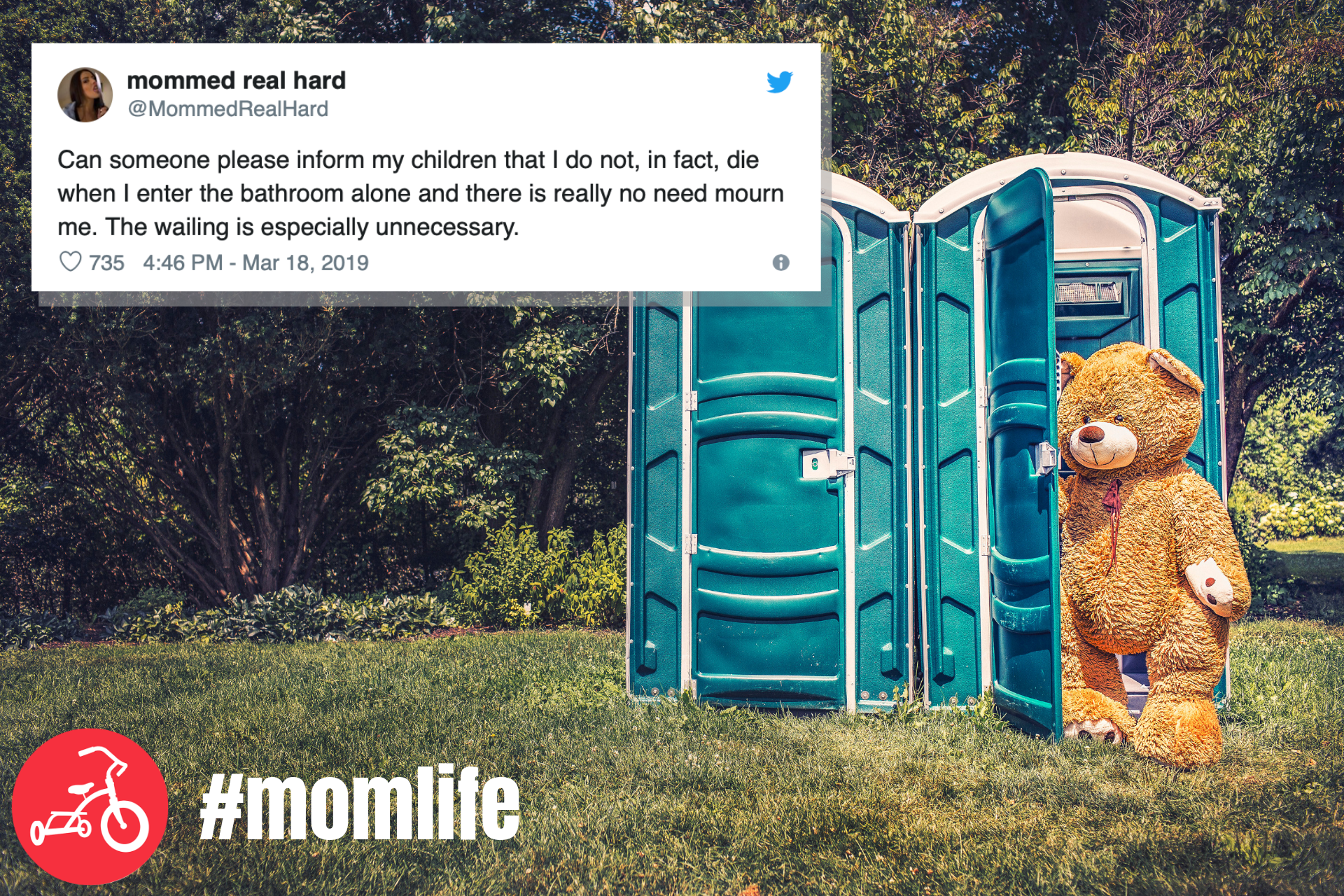
Spring is finally here! We’re gearing up for longer days and sending the kids outside to burn off their energy. While the littles are tearing it up outside, sit back, relax and check out this week’s collection of funny parenting tweets.


1. Kids, keeping you on your toes since forever.

2. SO working!

3. Oh, glitter.

https://twitter.com/MrGirlDad/status/1107633235297738752

4. I will make it, I promise.

https://twitter.com/MommedRealHard/status/1107790346547855360

5. It’s FINE.

https://twitter.com/ChuckWendig/status/1107809311403565056

6. Hmm, the path of least resistance does sound promising…

7. It’s called mom math, and it’s so real.

8. We choose the nice evening, every time.

9. Just 30%?

10. A one, two, three, four.


––Karly Wood

photo: Ryan McGuire via Gratisography; composite by Karly Wood for Red Tricycle


RELATED STORIES

Funniest Parenting Tweets of the Week: Mar. 15, 2019

Funniest Parenting Tweets of the Week: Mar. 8, 2019

Funniest Parenting Tweets of the Week: Mar. 1, 2019


As you know, here at Red Tricycle, we’re big fans of the Kids Edition tablet for a number of reasons, including the extra-tough virtually indestructable case, the worry-free money-back guarantee, the parental controls, and the access to high quality content.

So when Amazon offers a discount on the the tablet and tablet bundles, we are happy to share with our friends and readers, knowing you’re getting a great deal on a quality product that we all use ourselves.

Use the Red Tricycle exclusive promo code REDTRI at checkout and you get save 20% (or more) on Kids tablets and Kids tablet bundles, like this awesome deal that comes with Toy Story branded headphones (Bo Peep or Forky).


So if you’re shopping for a kids tablet, use this Amazon Promo Code: REDTRI to save 20% or more.

So that “Momo challenge” thing isn’t real—but the fact that parents need to be watching their kids’ online definitely is. Banning media and certain websites will not work. Why? Because the internet is constantly evolving and changing. And let’s face it: technology will play a significant role in the way they learn and communicate in their futures.

Here are the three things that I am doing to help my kids understand how to use technology.

1. Set time limits and stick to them.

At first, I was letting my nine-year-old use her internet-connected devices whenever she completed the things I needed her to finish, almost like a reward. When she started always choosing that reward, I decided I was doing things wrong. I really didn’t like the idea of her not wanting to do all of the things that make being a kid fun!  So we talked about it. A lot.

At first, I took away all tech, cold turkey. It wasn’t fun for her, and she felt like she was the “only one” who couldn’t use it. After a little while, she remembered that she loves to read and color and play hide and seek with her brother, and I remembered how little she is.

Now she is allowed to use a device for more random spurts of time. Sometimes I let her use it for five minutes, but sometimes she can play a game or watch a slime tutorial for 20 minutes. I try not to let it be longer than that.

2. You do NOT have to stand over their shoulders, but you do need to be present.

Make sure your kids are somewhere you can see and hear them while they are spending time online. Check in on them, and ask them what they are doing. If your kid has a favorite YouTuber, you should know who it is. If your kids like to play a particular game, try it too.

Let your kids know you are interested in what they find interesting! When you do this, they are more likely to share things with you as they get older.

3. Have a real talk about what it means to be safe online.

This is an offshoot of the “stranger danger talk,” except it’s the online safety talk. Chatting is an option on nearly every site our kids are using today. Please tell your kids how important it is never to give information about themselves to anyone online. However, let them know that if they do make a mistake, they can tell you. The last thing you want them to do is to keep a secret that could harm them.

Let them know that if they see or hear something they don’t understand, YOU are available to help them and that you won’t be mad at them for telling you.

Our kids navigate tough stuff every day. They are bombarded with things that a lot of us didn’t have to deal with when we were little. The most important thing that any of us can do for our kids is to communicate with them, on their level, consistently. Play, talk, read, sing, build and every once in a while, watch that cool new unboxing video with them, too.

As a teacher, I've always relied on love and a sense of humor to get through the day. When I became a mom, I decided to tackle the job the same way. I believe that every day is a chance to share some smiles with the people you love.

Scholastic recently released the findings from its seventh edition of its Kids & Family Reading Report. The report includes survey data from over 1,000 children ages 6 through 17 and their parents, along with 678 parents of kiddos between birth and five. One of the key findings was a sharp decline in frequency of and enjoyment in reading in kids between the ages of eight and nine-years, known as the “decline by nine.”

While 57 percent of eight-year-olds reported reading books for fun between five and seven days a week, only 35 percent of nine-year-olds did so. There was also a decline in the number of nine-year-olds who say they love reading and who think reading books is fun.

photo: Daria Shevtsova via Pexels

Lauren Tarshis, SVP & Editor-in-Chief/Publisher of Scholastic Magazines and author of the bestselling I Survived series said, “It is worrisome that the Kids & Family Reading Report shows us that many kids are losing their connection to reading when they need it most, in third grade. But the research also has a powerful message from kids that they want to read, but not just any book.”

So what can you do to prevent this potential decline? And how can you help your kiddo to find books that they actually want to read? The answer lies in more diverse books.

Pinkney added, “When a young reader finds a story that positively reflects his or her own story—or presents the stories of people not like themselves—that child becomes encouraged to read more. This has a direct impact on how kids view their place in the world, and helps them develop empathy and open-mindedness. Tomorrow’s leaders need to see themselves in books. The report empowers us to help kids do that.”

Along with adding diversity to your child’s lit lineup, act as a reading role model. Scholastic’s survey found that children who read often are often surrounded by people who enjoy reading. A whopping 82 percent of kids who are considered frequent readers reported knowing a lot of people who enjoy reading. In comparison, only 34 percent of infrequent readers said they know plenty of people who like to read. This may mean if you show enjoyment in reading, your child will too.

Beyond showing your own enjoyment in reading, the findings of Scholastic’s report underscores the importance of providing easy access to books (both at home and in school) and encouraging children to choose literature that interests them.

—Erica Loop


RELATED STORIES

11 Kids Books That Encourage Diversity & Inclusion

The Best Kids Books Pubbing in March 2019

105 Best Books to Read Before They Turn 12